
Mentioned last month in an article in Redmond Developer News was an application for the Palm Pre that we hadn’t seen before: Runway. Greg Stevenson, the developer of Runway, hadn’t planned on releasing any details of the application (or even acknowledging its existence) until the Pre was out, but the article threw a slight kind in his plans. So, he’s launched a new website to explain what Runway, and its companion application Instant Items, will do.
Runway is described on the website as a time and project management application. The article mentioned that Runway will be able to bring more online calendars to the Pre, but as Stevenson says on his website, “if Runway is just another time management application, then the Pre is just another mobile device.” And we all know that it’s more than just a phone and web browser.
Also coming from Stevenson is Instant Items, a phone-operation streamlining application. Apart from being able to access your contacts to dial numbers, it can also add items to your calendar and to-do lists. The website claims that it can do this “all in an extremely quick manner using a fraction of the keystrokes of traditional methods.”
Interesting, eh? Even working within the boundaries of the currently limited Mojo SDK, developers are coming up with some interesting application concepts.
[Originally posted at precentral.net]
Wednesday, June 3, 2009


Tuesday, June 2, 2009
iTunes-Pre Media Sync Probably Unlicensed

When Palm last week unveiled the Pre’s newfound ability to sync with iTunes, it set the blogosphere ablaze, most notably the big Apple fanblogs were enraged with misplaced indignation (seriously guys, Apple can fight for themselves, they’re big boys). But it also touched off an interesting dialog: how did Palm do it? A close examination of the presentation at the All Things D (D7) conference revealed that to iTunes, the Pre appeared as an iPod, even displaying “Syncing iPod” in the little information window at the top of iTunes.
That raises the question, as Daring Fireball writer John Gruber asked, is this legit? It all boils down to how iTunes recognizes iPods. It’s a three step process, described by Jon Lech Johansen’s nanocr.eu blog:
“The iPod has a specific USB Vendor Id that identifies it as being an Apple product and a USB Product Id that identifies it as being a specific iPod model. In addition, the iPod’s filesystem has a specific folder and file structure. Modern iPods also respond to a custom USB command that returns an XML file with information about the device.”
Joahnsen speculates that when you select Media Sync on the Pre, the device switches from the USB vendor and product IDs of the Palm Pre to that of a specific iPod model, and that its mass storage partition is structured in such a way that iTunes looks at it and says, ‘Yes, this is an iPod.’ Lastly, when prompted by iTunes with the aforementioned customer USB command, the Pre spits out the XML file about the device, presumably with information that says ‘I am an iPod.’
Palm can’t be using the iTunes synchronization APIs that added compatibility to a number of non-Apple devices way back in the day. For one, Apple has likely stopped licensing that API now that the iPod has enjoyed tremendous success (none of those players are younger than five years), and for two that API only worked with iTunes for Mac; Palm claims that Media Sync will work with iTunes for Mac and PC.
So, where do we go from here? Palm’s description of Media Sync comes with a footnote:
“(2) Compatible with iTunes 8.1.1 on Windows XP/Vista and Mac OS X version 10.3.9-10.5.7.”
Apple just yesterday released iTunes 8.2, which is purported to bring compatibility with the new iPhone OS 3.0. It seems unlikely that 8.2 will block the Pre from syncing just yet, but keep an eye out for 8.2.1.
For us the real question is this: Why does Palm seem to suddenly have so much chutzpah? They fearlessly included multitouch gestures in the browser, Google Maps, and Photo gallery that other companies feared to include (hi T-Mobile G1, how are you?). Now with the Palm Pre literally appearing as an iPod, it's almost as though Palm is taunting Apple. Apple doesn't like being taunted.
Like Gruber, we're increasingly getting the feeling that Palm is either trying to goad Apple into a legal showdown or they are so confident in their patent portfolio that they feel they can throw these features in Apple's face. Honestly -- BlackBerrys have had a iTunes sync app that worked pretty well and because it is a separate app, it avoids all these questions. Palm probably could have just as easily done that, but instead they went with direct iPod-imitating sync. If Apple decides to lawyer up, Palm likely feels they can simultaneously cry "monopoly!" and they have the smartphone patents to possibly make Apple back down. If they fail, well, if nothing else they'll be guaranteed gobs of free publicity.
[Originally posted at precentral.net
First two of five making-of-the-ad videos on Facebook
As promised, Palm has started releasing videos about the making of their Palm Pre ad campaign. These first two videos, released on Facebook, give us some blurry stylized shots of the woman who looks to be the face of the Pre (as opposed to disembodied iPhone voice) and her hand holding a Pre, and glimpses of the large scale of the commercial interspersed with images of the Chinese locations where Palm shot the ads. The first video contains one important quote from, well, somebody with Palm: “What we're doing here is nothing short of re-launching our brand, re-launching our company.”
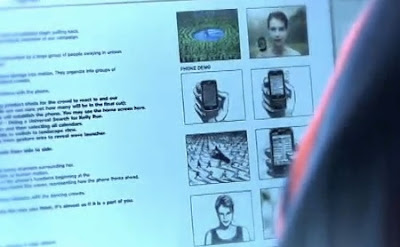
According to Palm’s description of the first video, the ads were filmed in three locations in China: a studio in Beijing (where hand lady was hanging out), the Shaolin Kung Fu School in Dengfeng, and the mountains outside of Kunming. Presumably the mountain backdrop from Kunming will be used with the bluescreen shots from the studio - we'll find out for sure come Wednesday. Also sighted: a few glimpses at the story-boards for the ad campaign, but the super-narrow depth-of-field blurs out most of the text accompanying them. In the meantime, we’ve got at least three more videos on the way. Either way, the graceful shots of the martial artists are sure to make for a captivating commercial.
[Originally posted at precentral.net

According to Palm’s description of the first video, the ads were filmed in three locations in China: a studio in Beijing (where hand lady was hanging out), the Shaolin Kung Fu School in Dengfeng, and the mountains outside of Kunming. Presumably the mountain backdrop from Kunming will be used with the bluescreen shots from the studio - we'll find out for sure come Wednesday. Also sighted: a few glimpses at the story-boards for the ad campaign, but the super-narrow depth-of-field blurs out most of the text accompanying them. In the meantime, we’ve got at least three more videos on the way. Either way, the graceful shots of the martial artists are sure to make for a captivating commercial.
[Originally posted at precentral.net
Monday, June 1, 2009
Verizon To Offer Palm Pre In 2009
Verizon Wireless will start selling the Palm Pre and BlackBerry Storm 2 in the next six months, according to a Reuters report. That move would end the exclusive deal Sprint has to sell the smartphone which launches June 6.
"Over the next six months or so you will see devices like Palm Pre and a second-generation Storm on the Verizon Wireless network," said Verizon Wireless CEO Lowell McAdam. "You can expect to see us launch a steady stream of new devices from multiple vendors."
For its part, Sprint Thursday said its exclusive arrangement with Palm to offer the Pre runs through 2009. Separately, Palm confirmed that Pre customers will be able to synchronize the device with Apple's iTunes to download unprotected music and other media. Palm unveiled the "media sync" capability and other Pre features during a demonstration at the All Things D conference.
Apple has not yet commented publicly on the Pre's iTunes synching capability, but the company is known to aggressively fight any perceived infringement of its intellectual property.
[Originally posted at mediapost.com]
"Over the next six months or so you will see devices like Palm Pre and a second-generation Storm on the Verizon Wireless network," said Verizon Wireless CEO Lowell McAdam. "You can expect to see us launch a steady stream of new devices from multiple vendors."
For its part, Sprint Thursday said its exclusive arrangement with Palm to offer the Pre runs through 2009. Separately, Palm confirmed that Pre customers will be able to synchronize the device with Apple's iTunes to download unprotected music and other media. Palm unveiled the "media sync" capability and other Pre features during a demonstration at the All Things D conference.
Apple has not yet commented publicly on the Pre's iTunes synching capability, but the company is known to aggressively fight any perceived infringement of its intellectual property.
[Originally posted at mediapost.com]
Palm Pre Video'd in a Sprint Store
We already knew that the Palm Pre has been sitting in Sprint Stores for a little while now. We assumed that we knew that Sprint employees wouldn't be able to help giving us some hands-on video and photos of the little guy. True to form, we have the above from skrilla1987. We'll forgive you for calling it a "Treo Pre" - but mainly because we're glad to see the camera in action there at the end of the video.
[Originally posted at precentral.net]
Sunday, May 31, 2009
Sprint Looks to Palm Pre for Turnaround Help
Sprint's turnaround plan so far has featured three main components: improved customer satisfaction, WiMAX deployment and a smartphone that can go toe-to-toe with the iPhone.
In the latter category, Sprint is hoping that it will finally achieve big-time smartphone success when the Palm Pre is released later this week. Following in the footsteps of the Apple iPhone and the BlackBerry Storm, the Palm Pre will be sold for $200 provided customers sign a two-year service agreement with Sprint and mail in a $100 rebate. During J.P. Morgan's recent Global Technology, Media and Telecom Conference in Boston, Sprint CEO Dan Hesse talked about how important it has become for carriers to have a flagship device that they can market their network around.
"What the iPhone has shown is that if you really do have a compelling device that is revolutionary … then customers will switch to your service," he said. "We think the Palm Pre stacks up very well against the iPhone, especially its operating system and the ability it gives you to multitask and to integrate with business and consumer applications."
During demonstrations of the device, Palm representatives have touted the features of the Pre's operating system, known as the Palm webOS, as a main differentiator from other smartphones. The webOS was designed to make developing applications for the operating system simple, as it is based on familiar Web standards such as CSS, XHTML and Javascript. The idea behind using well-known standards, the company says, is to make it easier for applications to integrate with each other. Additionally, the webOS is layered to allow users to keep several applications open at once and to let them flip between them.
During his talk at the J.P. Morgan conference, Hesse emphasized that Sprint's first priority still has to be improving its reputation for customer service, which has suffered ever since Sprint's acquisition of Nextel in 2005. The company seemingly hit bottom in 2008, when it lost 4 million wireless customers and hit its lowest-ever customer satisfaction score in the American Customer Satisfaction Index (ACSI), a quarterly study published by the University of Michigan's Ross School of Business.
Hints of Progress
However, the latest ACSI released last month suggests that Sprint's mission to improve its customer satisfaction could be starting to pay off. Overall, the study found that that Sprint's customer satisfaction rating has surged upward by 12.5% over its customer satisfaction rating last year. And although Sprint's improvement in customer satisfaction still leaves it last among major U.S. wireless carriers, it does place the carrier within striking distance of AT&T for third place on the survey. The ACSI says that while the improvement in customer satisfaction is good news for Sprint, it also speculates that a good portion of Sprint's higher rating is "probably due to the fact that many dissatisfied customers have defected" to other carriers.
Hesse said Sprint has also detected an improvement in its customer satisfaction, as its own internal numbers have gone up for 15 consecutive months. He cautioned, though, that it could take a long time to rebuild Sprint's reputation for customer service. Hesse likened the company's current situation to that of Japanese car manufacturers when they first tried to penetrate the American market and said that the company's quality was not being reflected in its public perception.
"You have to be patient when you have a brand that took some shots as our company did when it was focusing on integration issues with Nextel back in 2006 and 2007," said Hesse, who also claimed that "people who've experienced Sprint in the last 12 months have had a favorable experience."
The final plank of Sprint's turnaround plan, its mobile WiMAX data services, will come more into the spotlight later in the year, when the company launches services in Atlanta, Charlotte, Chicago, Dallas, Fort Worth, Honolulu, Las Vegas, Philadelphia, Portland and Seattle. For 2010, Sprint plans to spread its WiMAX offerings to Boston, Houston, New York, San Francisco and Washington, D.C.
The key for Sprint over the next year will be to aggressively market its WiMAX offerings before Verizon comes to market with its 4G Long Term Evolution (LTE) services. Sprint's WiMAX division – which is now calling itself Sprint 4G – currently offers the fastest mobile broadband services on the market, offering peak downlink speeds of 12Mbps and average downlink speeds between 2Mbps and 4Mbps. For comparison, AT&T's 3G network is now undergoing an upgrade that it says will give users peak downlink speeds of 7.2Mbps by the end of the year. Once Sprint's WiMAX division launches more broadly throughout the country, it will have at least a year or so as the fastest mobile data service before Verizon's LTE launches commercially.
Wireless Alternatives
In the meantime, Sprint hopes that it can continue the success it has had during the recession in aggressively promoting low-cost prepaid wireless plans that have partially offset its postpaid wireless subscriber losses. In the first quarter of 2009, for instance, the carrier added 674,000 prepaid subscribers, which helped take the sting out of the 1.25 million postpaid customers who left the carrier over the same period.
Prepaid plans often prove attractive to consumers during a recession because they are less expensive than traditional postpaid wireless plans. However, prepaid plans also generate less money per subscriber than postpaid plans. In this past quarter, for instance, Sprint generated $56 in average revenue per user (ARPU) for its postpaid plans and $31 in ARPU for its prepaid plans. Hesse alluded to his company's success in prepaid services during his talk at J.P. Morgan and said that bringing customers in for non-contract low-rate services would not be enough to help the company turn around.
"One area we need to turn around is the decline in postpaid subscribers," he said. "Our problem is that we're not bringing in new customers and that's largely a brand issue."
[Originally posted at pcworld.com]
In the latter category, Sprint is hoping that it will finally achieve big-time smartphone success when the Palm Pre is released later this week. Following in the footsteps of the Apple iPhone and the BlackBerry Storm, the Palm Pre will be sold for $200 provided customers sign a two-year service agreement with Sprint and mail in a $100 rebate. During J.P. Morgan's recent Global Technology, Media and Telecom Conference in Boston, Sprint CEO Dan Hesse talked about how important it has become for carriers to have a flagship device that they can market their network around.
"What the iPhone has shown is that if you really do have a compelling device that is revolutionary … then customers will switch to your service," he said. "We think the Palm Pre stacks up very well against the iPhone, especially its operating system and the ability it gives you to multitask and to integrate with business and consumer applications."
During demonstrations of the device, Palm representatives have touted the features of the Pre's operating system, known as the Palm webOS, as a main differentiator from other smartphones. The webOS was designed to make developing applications for the operating system simple, as it is based on familiar Web standards such as CSS, XHTML and Javascript. The idea behind using well-known standards, the company says, is to make it easier for applications to integrate with each other. Additionally, the webOS is layered to allow users to keep several applications open at once and to let them flip between them.
During his talk at the J.P. Morgan conference, Hesse emphasized that Sprint's first priority still has to be improving its reputation for customer service, which has suffered ever since Sprint's acquisition of Nextel in 2005. The company seemingly hit bottom in 2008, when it lost 4 million wireless customers and hit its lowest-ever customer satisfaction score in the American Customer Satisfaction Index (ACSI), a quarterly study published by the University of Michigan's Ross School of Business.
Hints of Progress
However, the latest ACSI released last month suggests that Sprint's mission to improve its customer satisfaction could be starting to pay off. Overall, the study found that that Sprint's customer satisfaction rating has surged upward by 12.5% over its customer satisfaction rating last year. And although Sprint's improvement in customer satisfaction still leaves it last among major U.S. wireless carriers, it does place the carrier within striking distance of AT&T for third place on the survey. The ACSI says that while the improvement in customer satisfaction is good news for Sprint, it also speculates that a good portion of Sprint's higher rating is "probably due to the fact that many dissatisfied customers have defected" to other carriers.
Hesse said Sprint has also detected an improvement in its customer satisfaction, as its own internal numbers have gone up for 15 consecutive months. He cautioned, though, that it could take a long time to rebuild Sprint's reputation for customer service. Hesse likened the company's current situation to that of Japanese car manufacturers when they first tried to penetrate the American market and said that the company's quality was not being reflected in its public perception.
"You have to be patient when you have a brand that took some shots as our company did when it was focusing on integration issues with Nextel back in 2006 and 2007," said Hesse, who also claimed that "people who've experienced Sprint in the last 12 months have had a favorable experience."
The final plank of Sprint's turnaround plan, its mobile WiMAX data services, will come more into the spotlight later in the year, when the company launches services in Atlanta, Charlotte, Chicago, Dallas, Fort Worth, Honolulu, Las Vegas, Philadelphia, Portland and Seattle. For 2010, Sprint plans to spread its WiMAX offerings to Boston, Houston, New York, San Francisco and Washington, D.C.
The key for Sprint over the next year will be to aggressively market its WiMAX offerings before Verizon comes to market with its 4G Long Term Evolution (LTE) services. Sprint's WiMAX division – which is now calling itself Sprint 4G – currently offers the fastest mobile broadband services on the market, offering peak downlink speeds of 12Mbps and average downlink speeds between 2Mbps and 4Mbps. For comparison, AT&T's 3G network is now undergoing an upgrade that it says will give users peak downlink speeds of 7.2Mbps by the end of the year. Once Sprint's WiMAX division launches more broadly throughout the country, it will have at least a year or so as the fastest mobile data service before Verizon's LTE launches commercially.
Wireless Alternatives
In the meantime, Sprint hopes that it can continue the success it has had during the recession in aggressively promoting low-cost prepaid wireless plans that have partially offset its postpaid wireless subscriber losses. In the first quarter of 2009, for instance, the carrier added 674,000 prepaid subscribers, which helped take the sting out of the 1.25 million postpaid customers who left the carrier over the same period.
Prepaid plans often prove attractive to consumers during a recession because they are less expensive than traditional postpaid wireless plans. However, prepaid plans also generate less money per subscriber than postpaid plans. In this past quarter, for instance, Sprint generated $56 in average revenue per user (ARPU) for its postpaid plans and $31 in ARPU for its prepaid plans. Hesse alluded to his company's success in prepaid services during his talk at J.P. Morgan and said that bringing customers in for non-contract low-rate services would not be enough to help the company turn around.
"One area we need to turn around is the decline in postpaid subscribers," he said. "Our problem is that we're not bringing in new customers and that's largely a brand issue."
[Originally posted at pcworld.com]
Sprint CEO looks ahead to upcoming Palm Pre, 4G
Dan Hesse, CEO of Sprint Nextel Corp., was in Atlanta on Friday to tout a new phone and assorted wireless technology. Recession notwithstanding, things are looking up for the Kansas-based wireless giant, which badly trails Verizon Wireless and Atlanta-based AT&T Mobility for customers.
During his 17-month tenure, Hesse has cut costs (partly by trimming 7,000 jobs, though few of Atlanta’s 1,800), improved customer service and positioned Sprint to do battle with the all-popular iPhone and BlackBerry smart phones.
Hesse, 55, spoke with the AJC. His comments are condensed for brevity.
Q: Next Saturday you’re rolling out the Palm Pre, Sprint’s answer to the iPhone and BlackBerry. Why should customers buy it?
A: The iPhone is a fantastic consumer device. The BlackBerry is a terrific business device. But if you want one phone that’s good at both, you’ll want a Pre. You can have multiple applications open at the same time. I can have the photo application open, check my contacts, look at the calendar and do e-mails when a phone call comes in.
Q: How will you gauge the phone’s success?
A: It will probably take about three months before we know. Early on, it will sell like crazy. The real issue is what kind of legs it will have after the initial euphoria.
Q: Won’t the recession keep customers away from the $200 Pre?
A: Customers are buying more and more expensive devices over time, even in a recession. But people are more budget-conscious and moving toward pre-paid contracts.
Q: You lost 1.25 million customers with long-term contracts during the first quarter this year. Yet you gained almost as many with no-contract, pre-paid plans and wholesale customers. Is that also a recessionary impact?
A: Yes, pre-paid plans are growing a lot faster than (long-term) plans. For the first quarter of 2009, we had more pre-paid than post-paid customers —- it was a landmark quarter. Will that trend remain once the economy improves? Do customers want to limit how much their kids spend each month to a $50 pre-pay? Do they not want to worry about a collection agency coming after them?
Q: Atlanta this summer will be one of a dozen cities to receive so-called 4G technology —- the next generation wireless broadband access —- from Sprint. What’s special about 4G?
A: The big difference is speed. Each generation is five times faster than the previous one. With 3G I can watch videos on my cellphone. With 4G, it’ll be just like watching TV and videos at home.
Q: You’ve got two kids. At what age did they get cellphones?
A: Around 9 or 10. They also get to see the devices before production. My older son is a real techno-geek. He didn’t like one of our phones because it didn’t have a back-lit keyboard. I asked him why that was important, and he said, ‘Because we all text at night under the covers.’
Q: So keyboards are now back-lit?
A: Yes.
[Originally posted at ajc.com]
During his 17-month tenure, Hesse has cut costs (partly by trimming 7,000 jobs, though few of Atlanta’s 1,800), improved customer service and positioned Sprint to do battle with the all-popular iPhone and BlackBerry smart phones.
Hesse, 55, spoke with the AJC. His comments are condensed for brevity.
Q: Next Saturday you’re rolling out the Palm Pre, Sprint’s answer to the iPhone and BlackBerry. Why should customers buy it?
A: The iPhone is a fantastic consumer device. The BlackBerry is a terrific business device. But if you want one phone that’s good at both, you’ll want a Pre. You can have multiple applications open at the same time. I can have the photo application open, check my contacts, look at the calendar and do e-mails when a phone call comes in.
Q: How will you gauge the phone’s success?
A: It will probably take about three months before we know. Early on, it will sell like crazy. The real issue is what kind of legs it will have after the initial euphoria.
Q: Won’t the recession keep customers away from the $200 Pre?
A: Customers are buying more and more expensive devices over time, even in a recession. But people are more budget-conscious and moving toward pre-paid contracts.
Q: You lost 1.25 million customers with long-term contracts during the first quarter this year. Yet you gained almost as many with no-contract, pre-paid plans and wholesale customers. Is that also a recessionary impact?
A: Yes, pre-paid plans are growing a lot faster than (long-term) plans. For the first quarter of 2009, we had more pre-paid than post-paid customers —- it was a landmark quarter. Will that trend remain once the economy improves? Do customers want to limit how much their kids spend each month to a $50 pre-pay? Do they not want to worry about a collection agency coming after them?
Q: Atlanta this summer will be one of a dozen cities to receive so-called 4G technology —- the next generation wireless broadband access —- from Sprint. What’s special about 4G?
A: The big difference is speed. Each generation is five times faster than the previous one. With 3G I can watch videos on my cellphone. With 4G, it’ll be just like watching TV and videos at home.
Q: You’ve got two kids. At what age did they get cellphones?
A: Around 9 or 10. They also get to see the devices before production. My older son is a real techno-geek. He didn’t like one of our phones because it didn’t have a back-lit keyboard. I asked him why that was important, and he said, ‘Because we all text at night under the covers.’
Q: So keyboards are now back-lit?
A: Yes.
[Originally posted at ajc.com]
Subscribe to:
Posts (Atom)

